Comprehensive Care for Every Stage of Your Pet’s Life
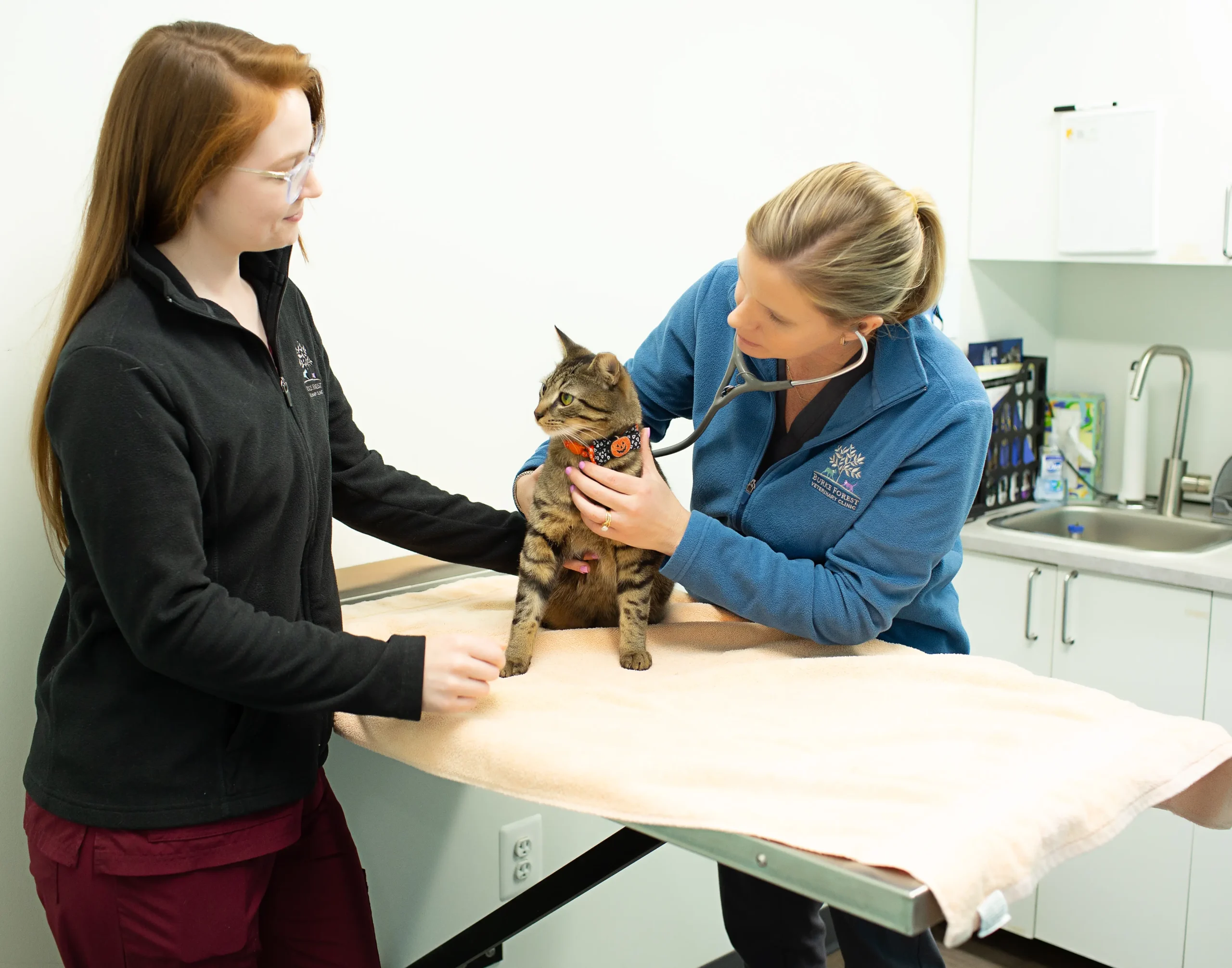
We at Burke Forest believe the number one thing every pet needs is a good annual check up. While most of us remember to take their pet in for their vaccines, the annual comprehensive exam is still the most important part. At each annual exam we will ask you questions about your pets history. Things like diet, appetite, urinary and fecal habits, coughing, sneezing, or change in thirst help give us clues into your pets health. Where you pet lives, who they live with and where you may travel helps us guide you as to which vaccinations or preventative treatments may be important.
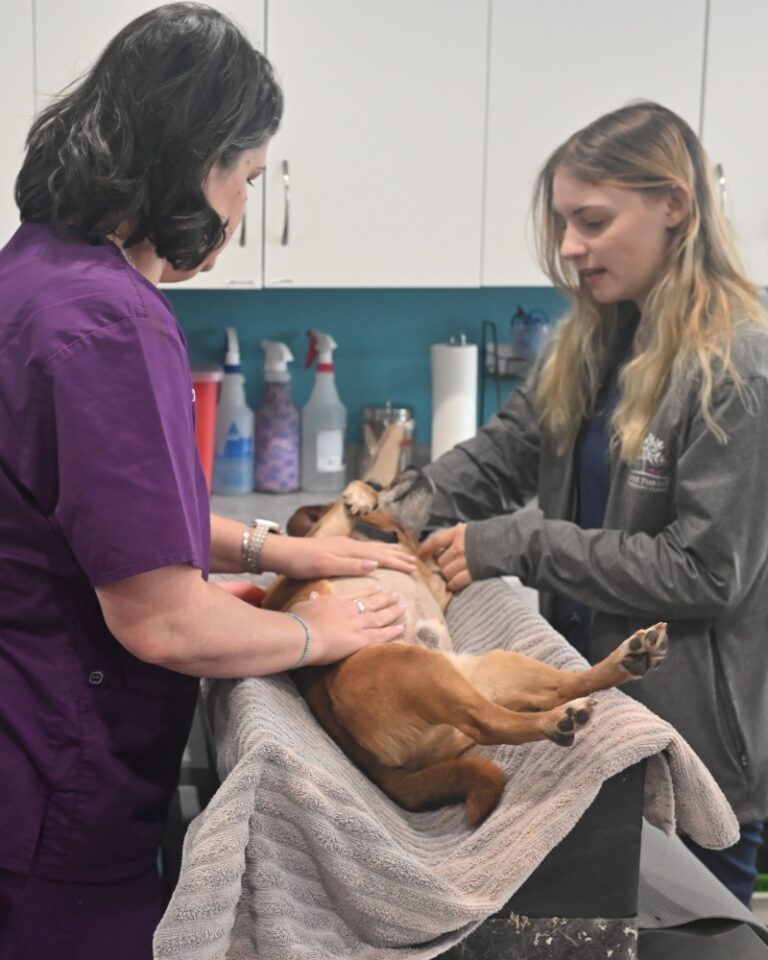
The doctor will also preform a comprehensive physical exam. While the doctor does each exam, they check all the major body systems. While sometimes it looks (*and hopefully feels) like a good massage, the doctor is checking lymph nodes, abdominal palpation, listening to heart, looking for growths or masses. The history and exam allow us to comfortably make the best recommendations to keep your pet’s optimum health and comfort.
Maintaining Your Pet’s Lifetime Health
Gestation: We can give you advice on making a nest for your expectant pet, nutritional preparation, and worming and disease prevention.
Vaccinations: Core vaccinations are vital to all cats and dogs. Our doctors can recommend which vaccinations are best for your pet's needs.
Spaying and Neutering: Unless you plan to breed your pet, we recommend having your pets spayed or neutered.
Microchipping: Microchipping is the most reliable means of recovering your pet if it gets lost.